Vitamin D: a steroid hormone, not just a vitamin

Understanding the True Role of Vitamin D in Your Body
Do you think vitamin D is just another vitamin? Its function is actually quite unique. Let's discover together why this molecule deserves your full attention.
Why Calling It a "Vitamin" Is Reductive
Unlike conventional vitamins, which primarily serve as enzymatic cofactors, vitamin D functions in a way that is very similar to that of a steroid hormone.
The Journey of Vitamin D Through Your Body
- Step 1: sun exposure. It all begins with UVB rays from the sun touching your skin.
- Step 2: in the skin. A molecule called 7-dehydrocholesterol is transformed by these rays.
- Step 3: passing through the liver. The molecule undergoes an initial transformation: 25-hydroxylation.
- Step 4: activation in the kidneys. The kidneys perform 1α-hydroxylation to create calcitriol, the biologically active form of vitamin D.
- Step 5: action in the body. Calcitriol binds to specific receptors (VDR) present in many tissues.
It is involved in the expression of many genes: this is why it is often compared to a hormone.
Vitamin D, a Vitamin with Multiple Roles
According to Regulation (EU) No 432/2012, vitamin D contributes notably:
- to the normal functioning of the immune system,
- to the maintenance of normal muscle function,
- to the normal absorption and use of calcium and phosphorus, and to the maintenance of normal bones and teeth,
- to the process of cell division.

Why We Are Often Deficient in Vitamin D
Our ancestors spent a lot of time outdoors. Today, several factors limit the skin synthesis of vitamin D:
- Sunscreen: it reduces the production of vitamin D (sun protection remains essential, however!).
- Indoor living: between the office, home, and transportation, we spend most of our time sheltered from UVB rays.
- Air pollution: suspended particles filter out some of the UVB rays.
- Latitude: in France, the sun is not strong enough for much of the year to allow sufficient skin synthesis.
In France, a large part of the population has insufficient vitamin D levels, especially at the end of winter. This is largely due to our environment and lifestyle.
Appropriate Supplementation
In this context, supplementation can be useful to top up your intake, ideally after consulting your doctor, who can measure your vitamin D levels.
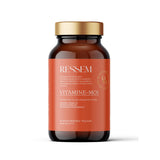
This is the spirit in which RAYONNE-MOI was developed: a precisely dosed plant-based source of vitamin D3.
Would you like to learn more about vitamin D and discover RAYONNE-MOI? Feel free to explore our website or contact us.
RESSEM – For informed nutrition. A dietary supplement does not replace a varied and balanced diet or a healthy lifestyle.
Discover RAYONNE-MOI, our plant-based vitamin D3 3000 IU combined with vitamin K2 (K2VITAL®). Vitamin D contributes to the normal functioning of the immune system and to the maintenance of normal bones and muscle function.